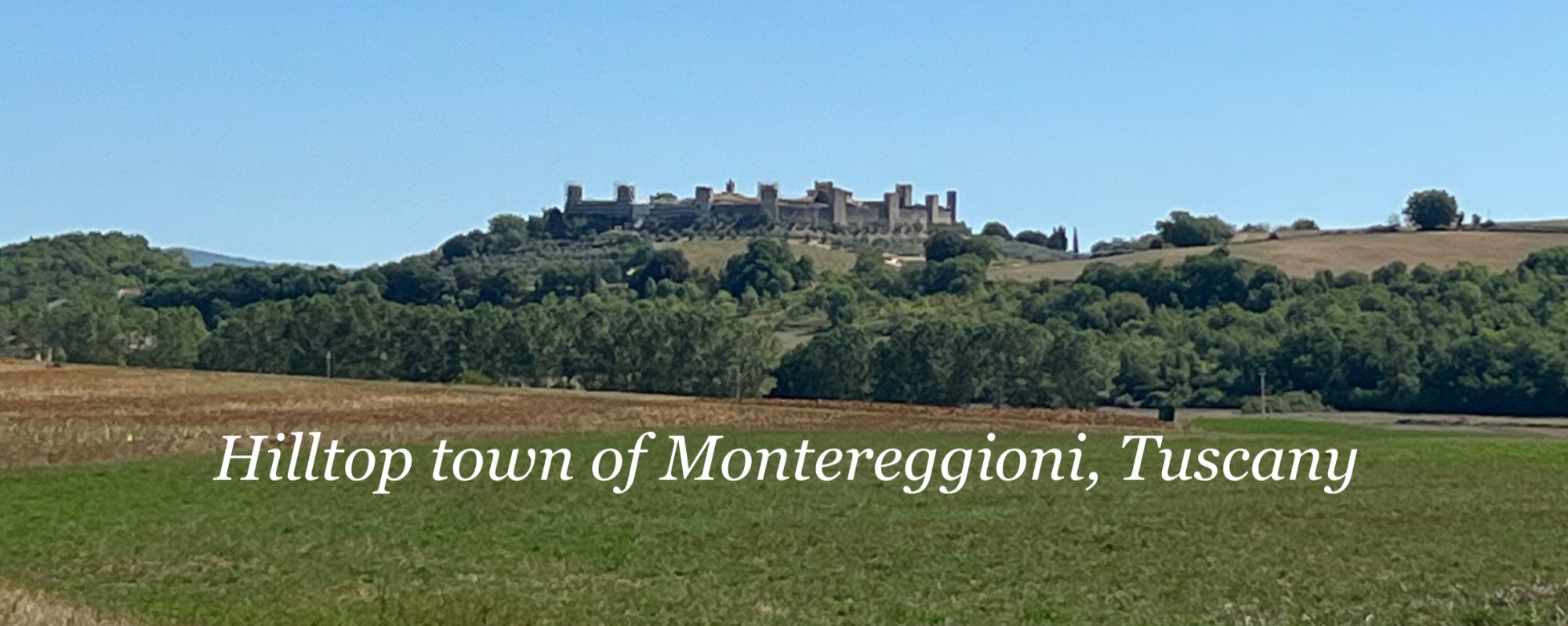
Camino to Rome or Via Francigena is an ancient trail that takes pilgrims on an epic journey from Canterbury, England; across the channel to France and through Switzerland before crossing Italy on their way to Rome. Like the Camino de Santiago, this is a historic medieval route and takes walkers to some of Europe’s most stunning regions such as Champagne in France, the Alps and Tuscany.
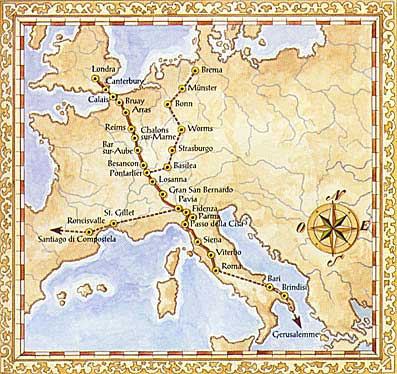
The route was known in Italy as the “Via Francigena” (“the road that comes from France”) or the “Via Romea Francigena” (“the road to Rome that comes from France”). In medieval times it was an important road and pilgrimage route for those wishing to visit the Holy See and the tombs of the apostles Peter and Paul.
The Via Francigena trail might not be as well known as the Camino de Santiago but it has been a path taken by pilgrims across Europe for centuries and the Camino to Rome, can be explained in 12 interesting and simple facts:
1 – The Via Francigena covers 1900kms from Canterbury to Rome.
2 – It is one of the many routes taken by European pilgrims on their way to Rome since the Middle Ages.
3 – The Via Francigena or Camino to Rome crosses four European countries: UK, France, Switzerland and Italy; and areas of spectacular beauty and historic interest.
4 – Sigeric the Serious, Archbishop of Canterbury, walked the route to Rome and recorded his travels in a journal in the 10th century. This can be considered the first ever Via Francigena ‘guidebook’ and the route today follows Sigeric’s trail as much as possible.
5 – Slightly different variations have emerged in sections of the Via Francigena route, to avoid bigger roads or areas not suitable for walking/cycling.
6 – It is pronounced: Francheegena (with accent on the ‘ee’) but to make it easier you can also call it the Camino to Rome.
7 -The Via Francigena route is a Council of Europe European Cultural Itinerary since 1994 and Major Cultural Route since 2004.
8 – Once in Rome, you can request your Testimonium, certificate of pilgrimage to Rome. Once again I will be carrying a Credential or Camino Passport to collect stamps from cathedrals, museums and visitor centres as proof of travel.
9 – It is not very clear how many people walk or cycle parts of the Via Francigena each year but it was estimated there were 2,500 in 2012 (Source: Cicerone Guides). * Compared to over 240,000 who reached Santiago de Compostela in 2014 for instance.
10 – The Via Francigena is still very much at a development stage in terms of way markings. Those will vary greatly depending on the countries and regions. It is important to have a good guidebook or route notes and maps with you.
11 – Accommodation particularly in rural areas can be limited.
12 – It will take approximately 3 months to walk the full length of the Via Francigena, the Camino to Rome all the way from Canterbury. It should take a month and a half to cycle the route.
 Via Francigena Italy - 2022